Jerry Q. Kellems
American, 1941–2010 · Painter · Draftsman
Catalogued as Jerry Quinton Kellems
An American painter who worked in near-total privacy: thirty years of painting every day, fewer than ten pictures thought to have been seen publicly in his lifetime, and a vocabulary of marks and symbols whose meaning went with him.
From the collection
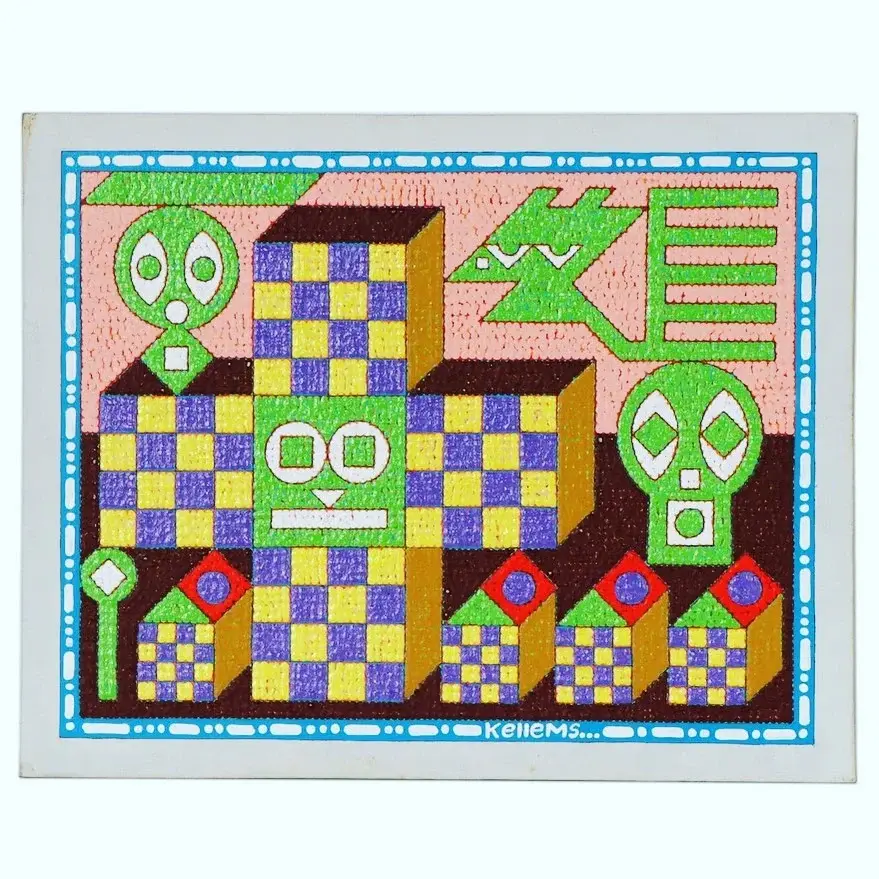
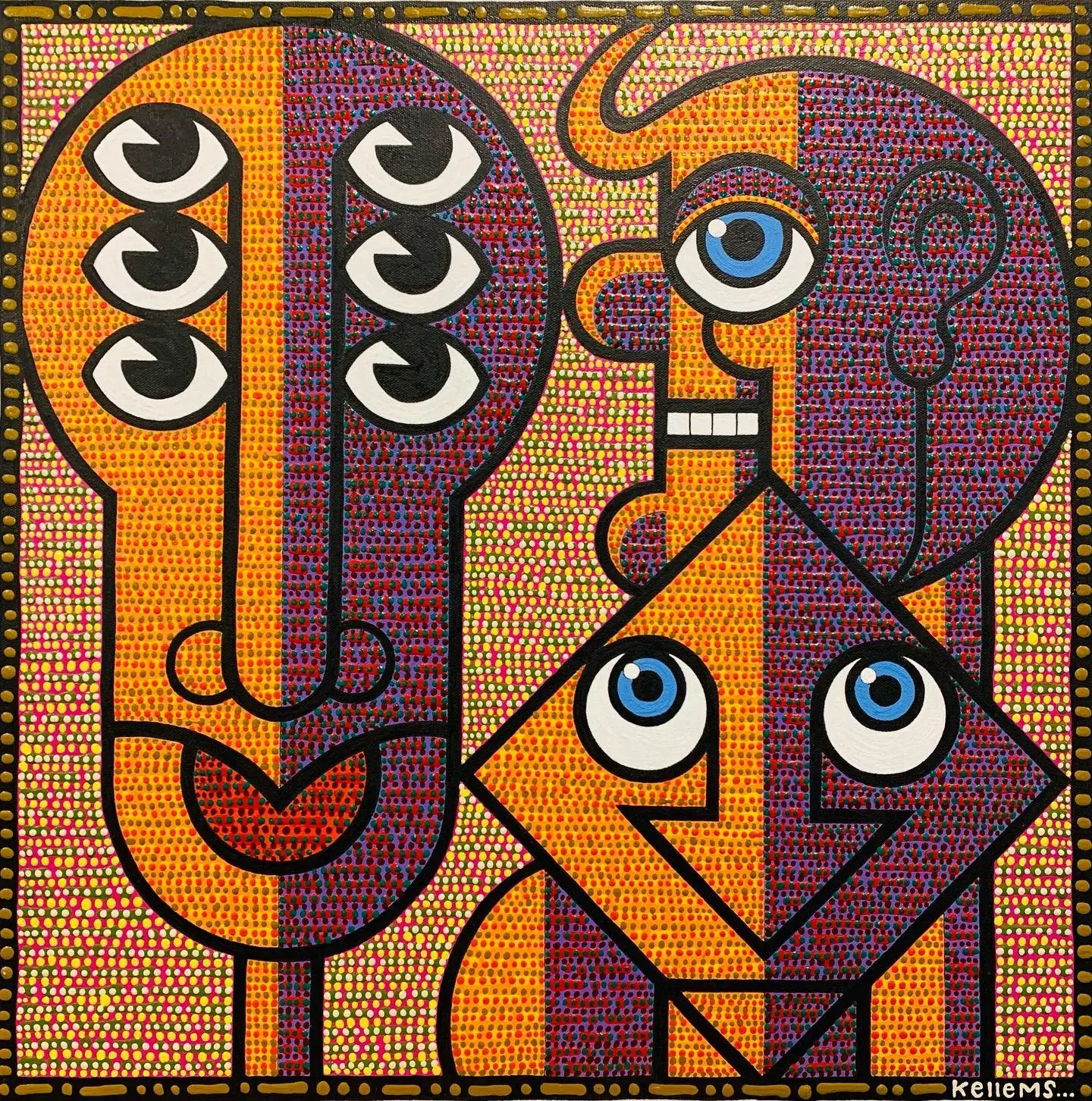
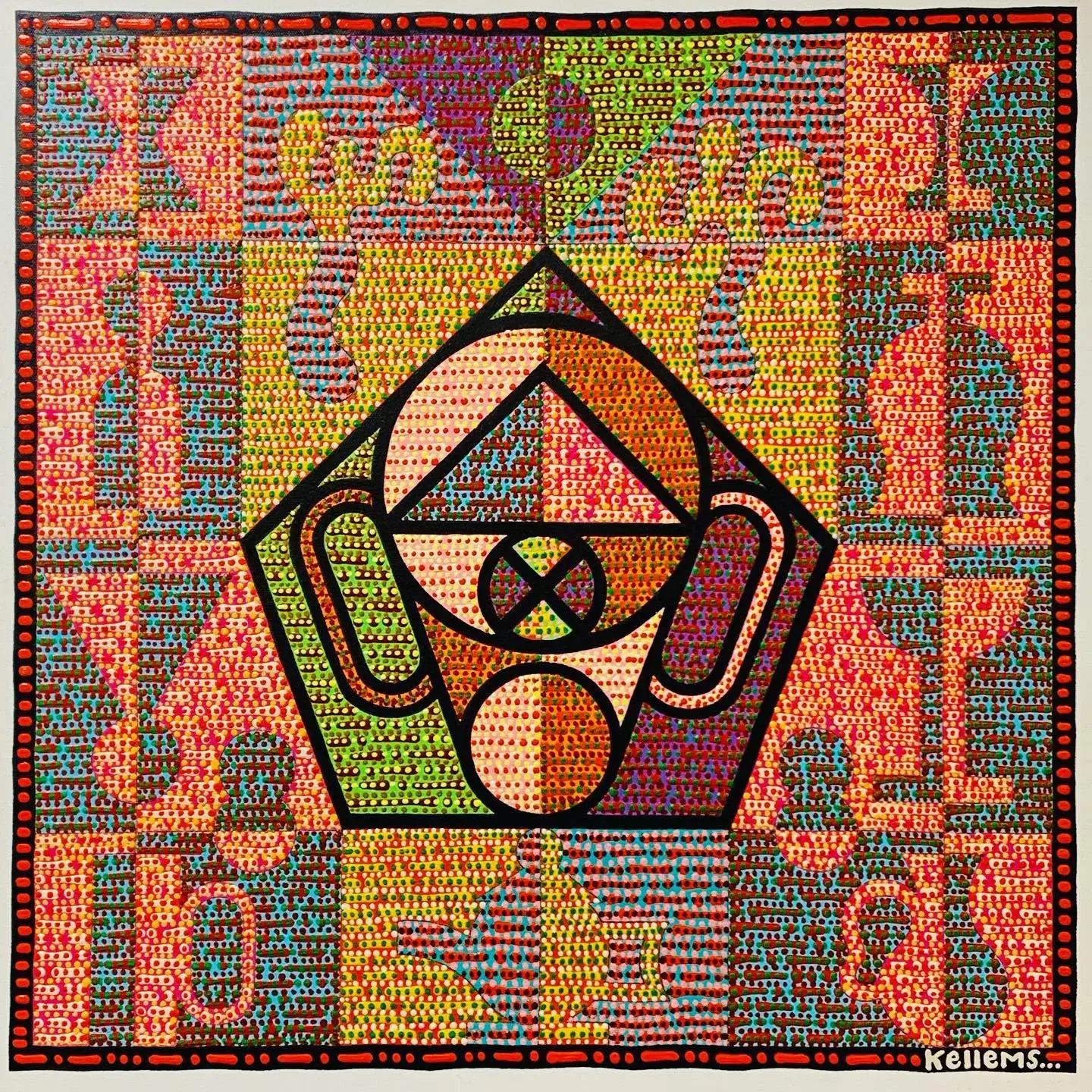
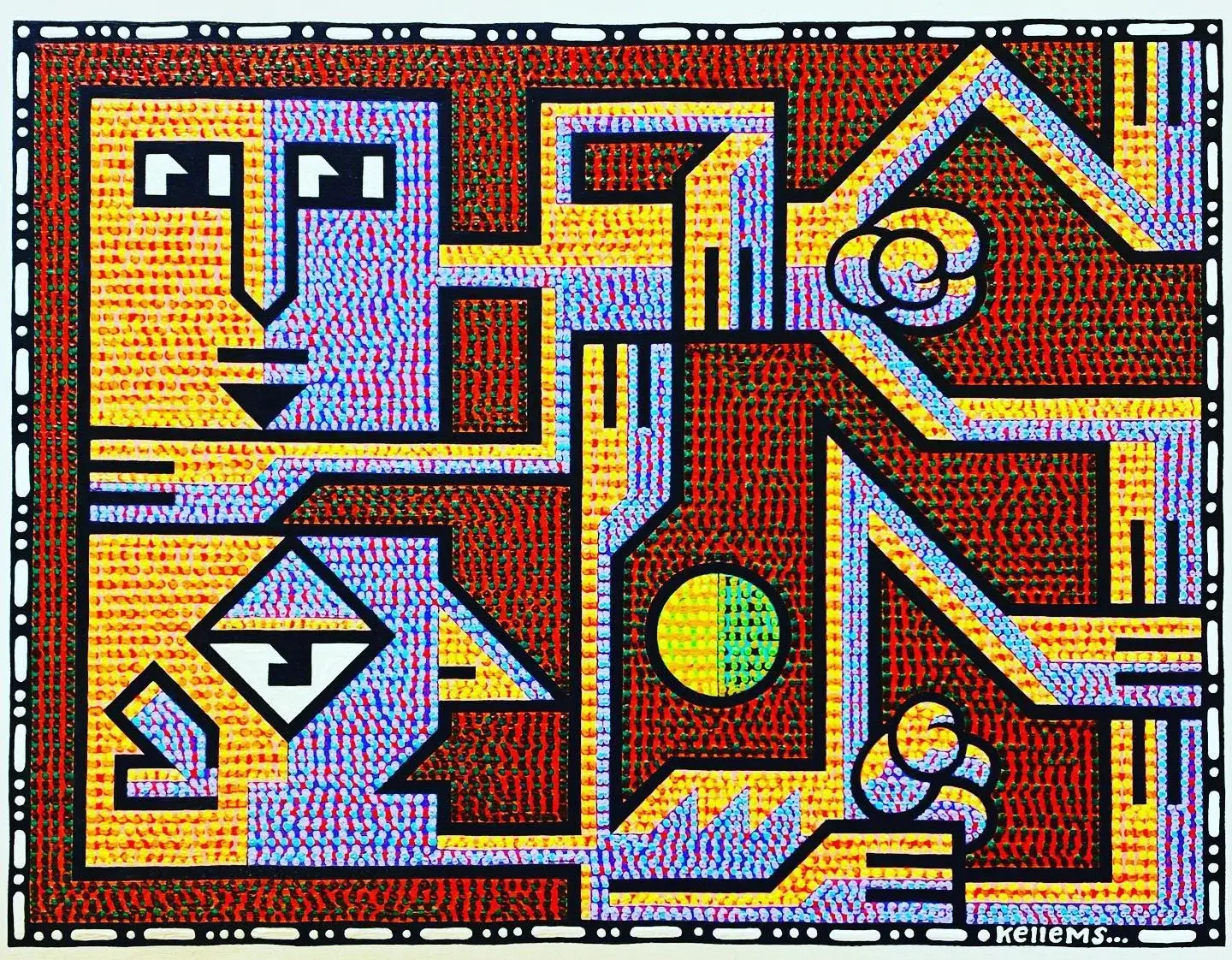
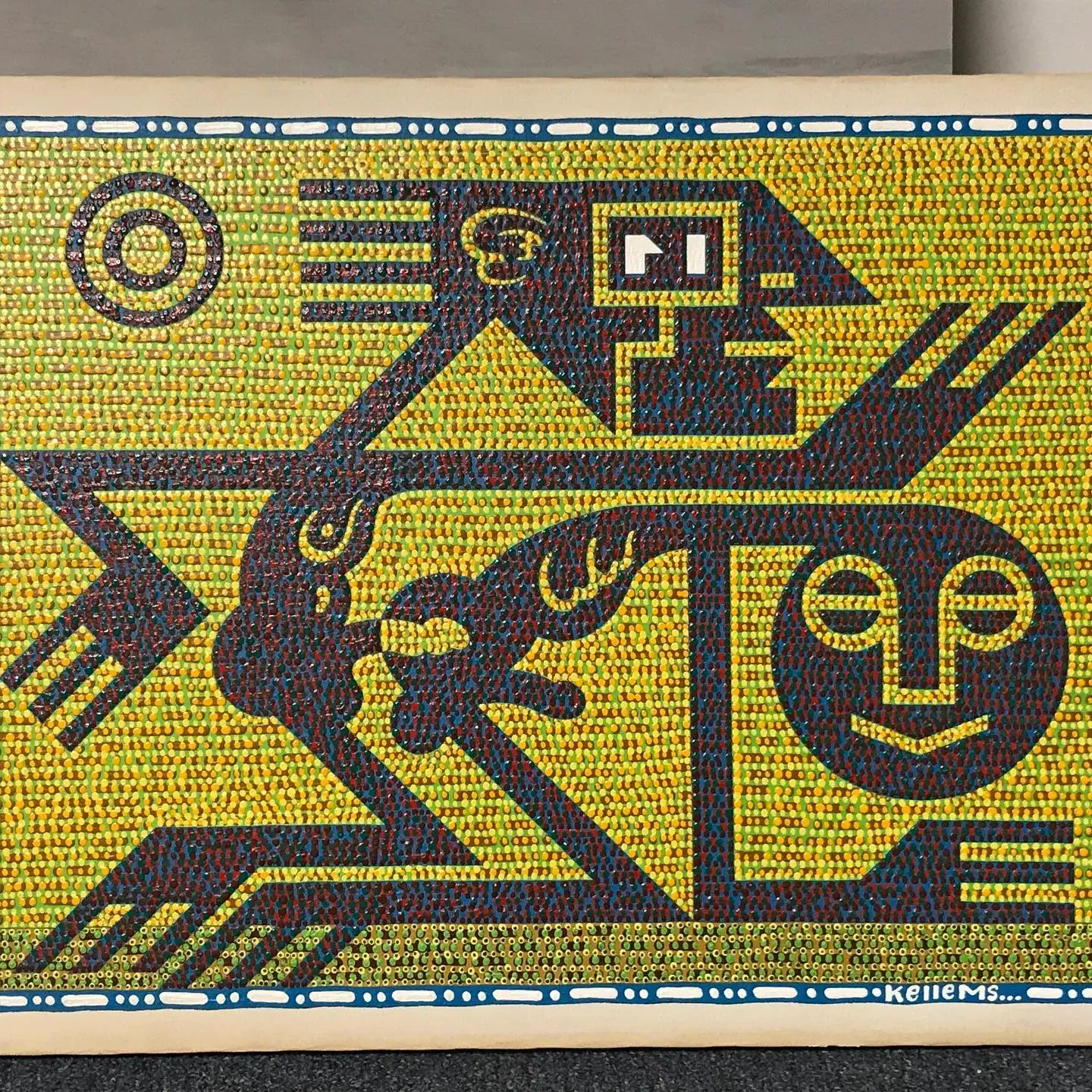
 Jerry Kellems Acrylic on Canvas, 24 in × 30 in$1,800
Biography · 1941–2010
Jerry Q. Kellems built his pictures out of marks. Geometric shapes lock together in flat, saturated color, and the surfaces are stippled with dotted pigment until a painting reads as woven rather than brushed.
He was born in Arkansas in 1941 and raised in Saint Louis, where he first took up drawing. His high-school years were spent in Minnesota, including a brief period at an art school there — the only formal training in a career he otherwise built for himself.
Kellems enlisted in the United States Navy in 1963 and served until 1967. The sea stayed with him: for the next several decades he worked aboard hydrographic survey ships, charting water far from any art scene. That distance is part of the work. He painted outside the conversation of galleries and movements, and the pictures answer to nothing but their own logic.
From around 1980 he took the work seriously, and from then on it took everything. Kellems painted from morning until night, day after day, and kept at it to the end of his life. It was not a sideline he returned to when there was time — it was the shape of the day, every day, for thirty years.
His sources are unusually wide. Pre-Columbian art, the satirical draftsmanship of George Grosz, the uneasy fantasy of Alfred Kubin, the object-making of sculptor H.C. Westermann, and the desert nonsense of Krazy Kat cartoonist George Herriman all surface in his compositions. The dots, patterned borders and biomorphic shapes carry an unmistakable echo of Aboriginal painting as well.
He described the mechanics plainly: marks make color, and lines define volume. Everything else is built from those two moves.
In Figments, the book of drawings he published in 1987, Kellems explained the title — the compositions are figments of his imagination, and a good many of them are jokes. He was glad for viewers to arrive at their own reading, and never insisted on his own.
The method was not tied to one material. Acrylic on canvas is what this gallery holds and what surfaces most often at auction, but he worked in watercolour, marker and pencil as well — Figments is a book of drawings for that reason — and one vocabulary carries across all of them: the dotted fill, the patterned border, the figure assembled from marks. Among the works on paper is a 1984 watercolour portrait of the artist Norman Goodwin (1943–2019), made in his pointillist manner. It is a rare turn outward. The language he usually aimed at figments is pointed here at a friend.
He was private in a way that went past the work. By the family's account he gave very little away about his own life, even to them — no explaining himself, no running commentary, no key. What he had to say he put on the canvas and left there.
Almost none of it was ever seen. Fewer than ten of his paintings are thought to have reached the public in his lifetime — he was not exhibiting, not selling, not courting a scene. A body of work built daily for three decades stayed, in effect, private.
Kellems died in 2010, and Deepfield Gallery acquired this collection directly from his family. The paintings are acrylic on canvas, each one signed and unframed.
Which leaves the paintings holding something nobody can now confirm. The recurring marks, the patterned borders, the figures that come just short of legible — this was a vocabulary, and the one person who could translate it took it with him. Much of what these pictures were built to say is simply gone. He would probably not have minded: he was glad for viewers to arrive at their own reading and never insisted on his own, and what was once an invitation is now the only way in. The deciphering falls to whoever is standing in front of the work.

Influences
- Pre-Columbian artPatterned borders and flat, locked-together geometry
- George GroszGerman, 1893–1959 — satirical draftsmanship
- Alfred KubinAustrian, 1877–1959 — uneasy fantasy
- H.C. WestermannAmerican, 1922–1981 — sculptor and object-maker
- George HerrimanAmerican, 1880–1944 — cartoonist, Krazy Kat
Timeline
- 1941Born in Arkansas.
- ChildhoodRaised in Saint Louis, where he first takes up drawing.
- High schoolMinnesota, including a brief period at art school — his only formal training.
- 1963–1967Enlisted in the United States Navy.
- After 1967Works aboard hydrographic survey ships for the next several decades.
- c. 1980Takes up painting and drawing seriously, and works at it daily from then on.
- 1984Paints a pointillist watercolour portrait of fellow artist Norman Goodwin.
- 1987Publishes Figments, a book of his drawings.
- 2010Dies, aged 69.






Sources and notes
Some auction records list 1942 as the birth year. Biographical accounts and artist indexes give 1941, which is what the gallery uses.
Written by the gallery from public auction and dealer listings and artist indexes, from the artist's own statements in Figments (1987), and from the Kellems family, who kept the work after his death and from whom Deepfield Gallery acquired this collection. Five things come from the family rather than the published record: the daily working habit from about 1980, that he drew in marker and pencil alongside the painting, how private he was about his own life, the estimate that fewer than ten paintings were publicly seen while he lived, and the provenance of this collection. The 1984 Norman Goodwin watercolour is documented in a dealer listing.